
A classic sausage casserole is the ultimate comfort food, rich, hearty, and full of flavour. This easy one-pot recipe is cooked slowly on the hob in a saucepan, casserole pot or Dutch oven, where sausages simmer in a thick tomato sauce with vegetables, herbs, and a hint of smoked paprika. It’s perfect for a comforting family meal, and the leftovers taste even better the next day.


What You Need To Make Sausage Casserole
For more concise instructions or to print out the recipe please head to the recipe card at the bottom of this post.
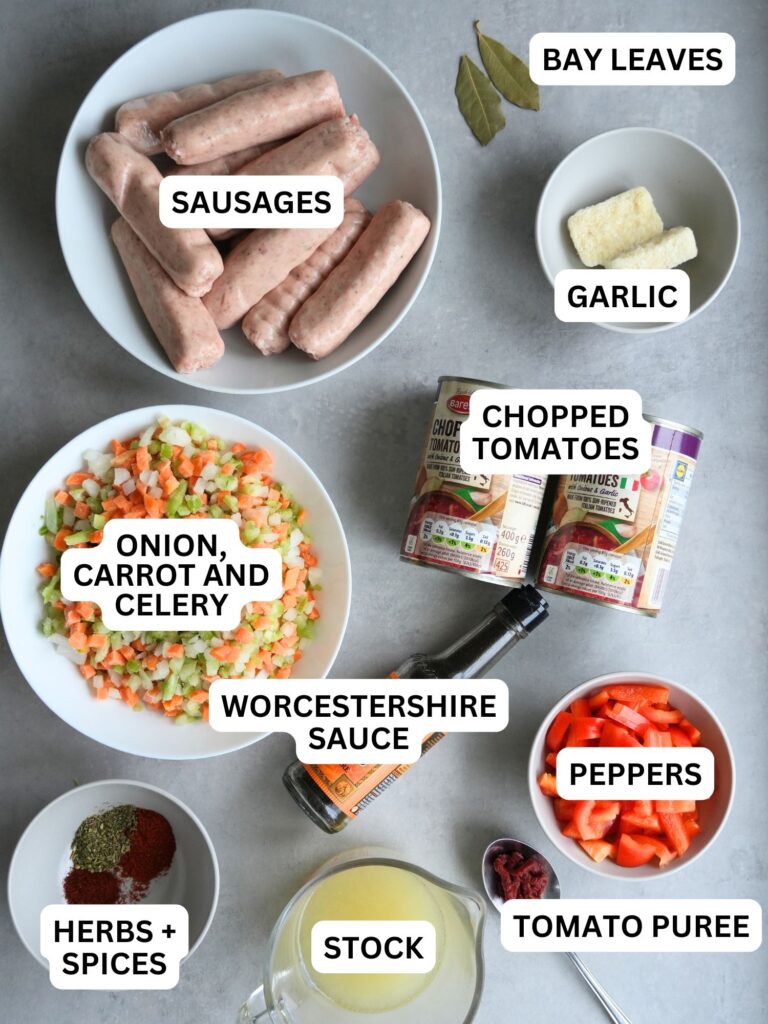

Sausages
Pork sausages are traditional, but chicken or veggie versions work just as well. You can even add a little chorizo for a smoky twist.
Onion, Celery and Carrots
To make this a quick to prepare meal, I used a frozen, chopped mix of onion, celery and carrots that I bought from the supermarket (it’s so handy having this on standby in the freezer!)
Garlic
I used some frozen garlic puree I had, you can use fresh garlic cloves (crushed) or garlic from a jar, frozen chopped garlic – whatever form you have available!
Peppers
These bring natural sweetness and colour. I just used 1 red pepper, but feel free to swap in other vegetables like courgette, mushrooms or aubergine.
Tinned Tomatoes and Tomato Purée
These create the rich tomato base. The tomato purée helps thicken the sauce and adds extra depth.
Stock
Use chicken or vegetable stock. You can add a splash of red wine if you want a richer sauce.
Smoked Paprika
Adds warmth and a subtle smokiness, it’s the secret to a deeper, more flavourful sausage casserole.
Chilli Powder or Cayenne Pepper
This is optional, I used just a little bit to add a bit of extra warmth to the casserole.
Herbs and Seasoning
Dried mixed herbs, thyme, or rosemary all work well. A bay leaf or two adds even more flavour as the casserole simmers.
Worcestershire Sauce
The perfect flavour enhancer for stews 🙂
Beans (Optional)
Butter beans, cannellini beans, or kidney beans are all great for making the dish more filling.
You can also make sausage casserole in a slow cooker or a pressure cooker.
Making Sausage Casserole on the Hob
Brown the sausages
Heat the olive oil in the pot over a medium heat. Add the sausages and cook until golden brown all over, about 8 minutes. Remove and set aside on a plate. If any bits have stuck to the base of the pan, deglaze with a little of the hot stock.
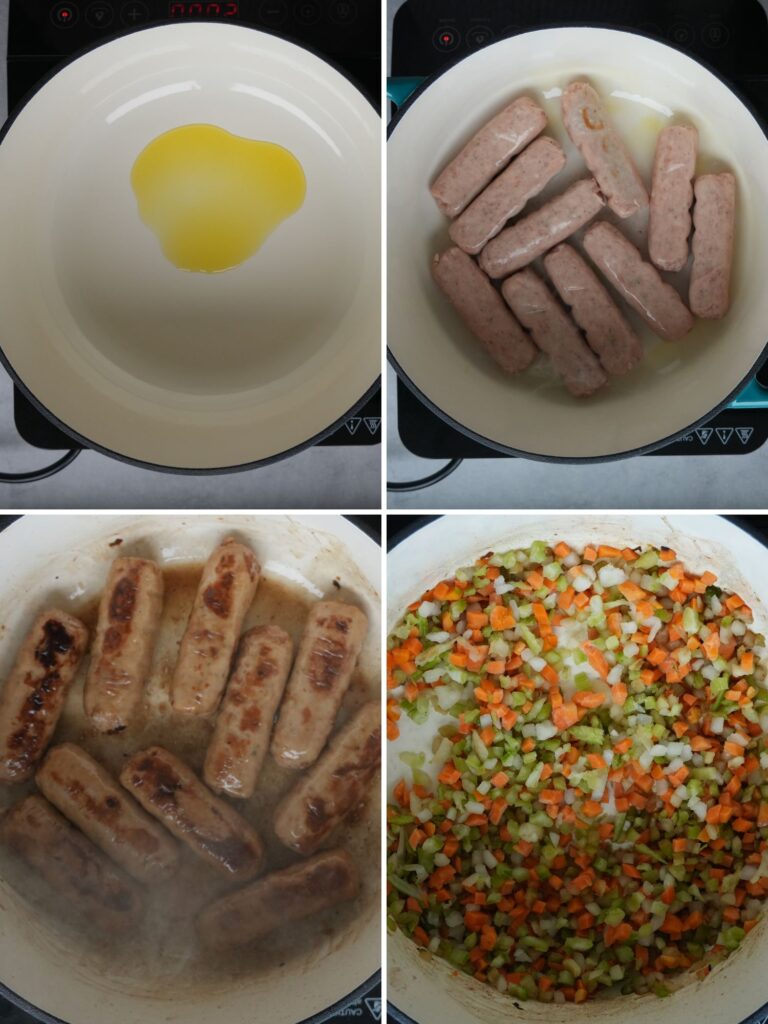
Sauté the vegetables
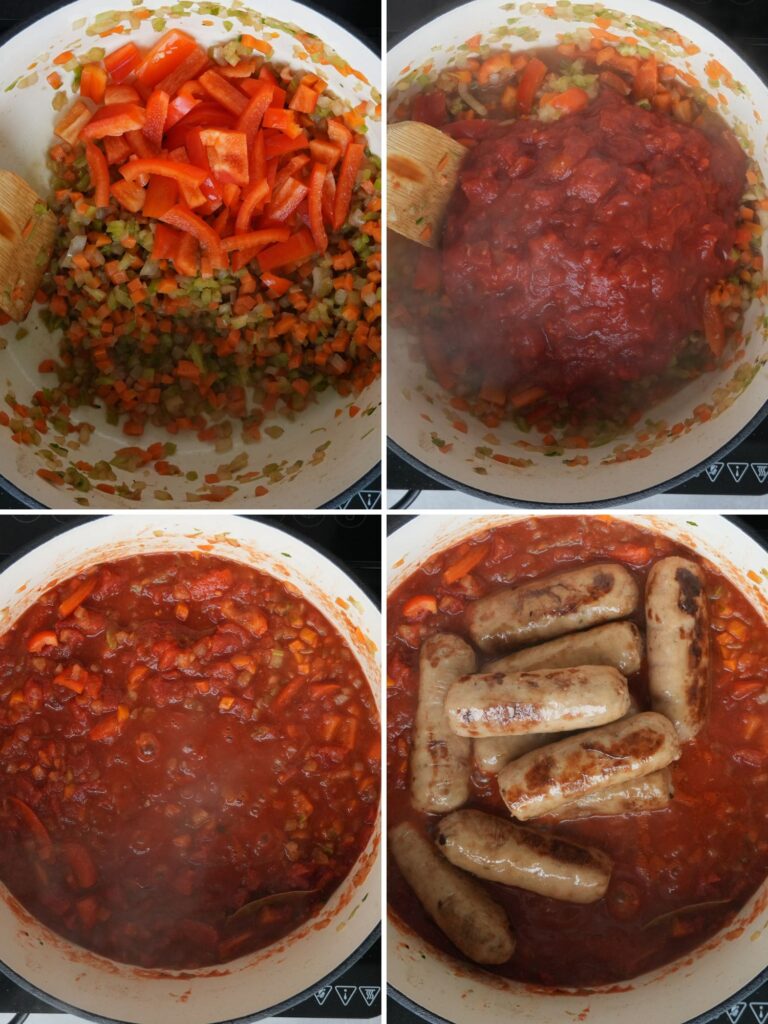
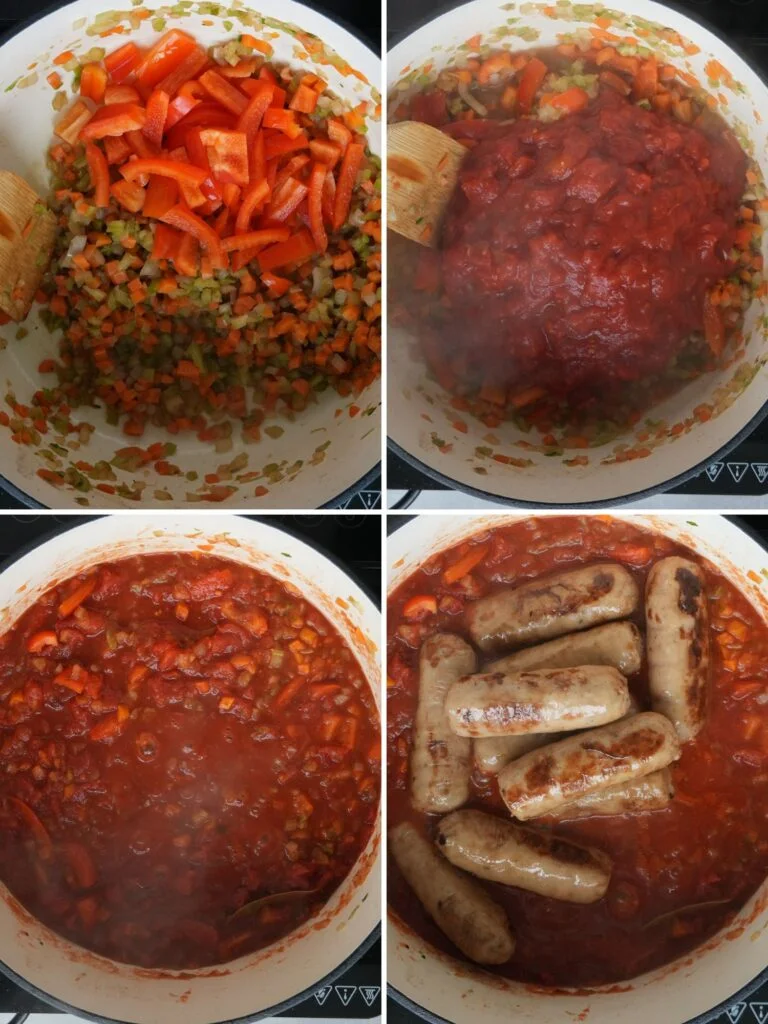
In the same pot, add the onion, celery and carrots. Cook for around 5 minutes, stirring often, until they begin to soften. Add the garlic and peppers and cook for a minute or two longer.
Build the sauce
Add the stock, chopped tomatoes, herbs and spices, Worcestershire sauce and the bay leaves. Season with salt and pepper, then mix well.
Combine and simmer
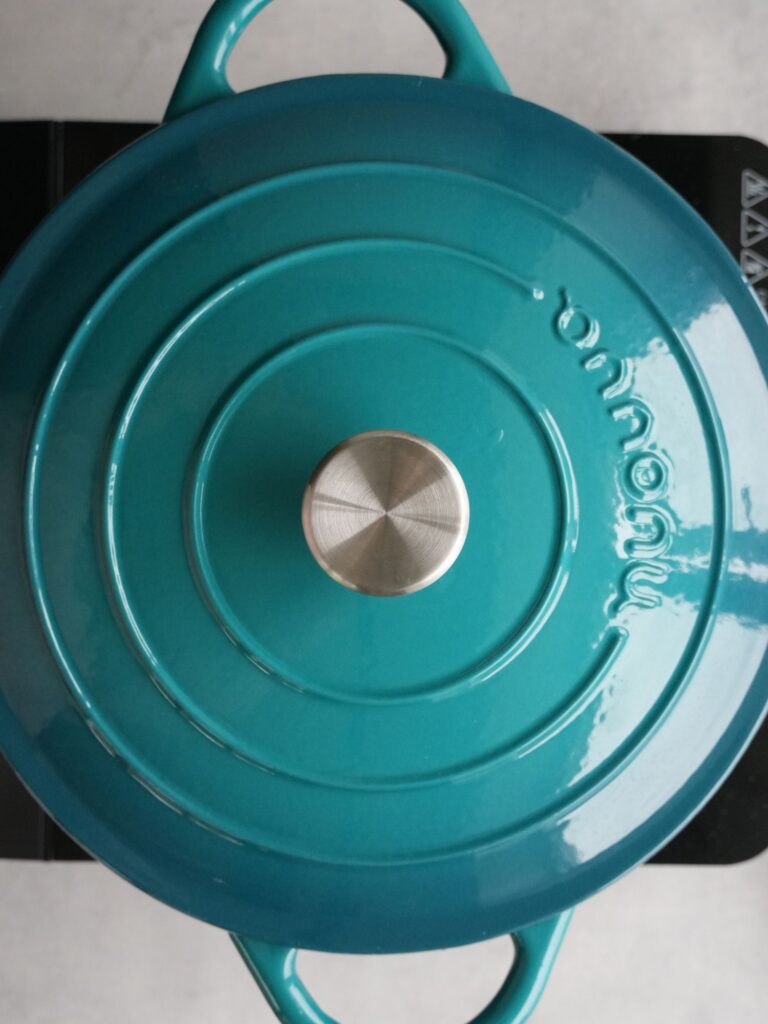
Return the sausages to the pot. Bring everything to a gentle simmer, then reduce the heat to low. Cover and cook for 45 minutes to 1 hour, stirring occasionally, until the sauce thickens and the vegetables are tender.

Add the beans (optional)
Stir in the drained beans during the last 5 minutes of cooking to heat them through.
Serve
Taste and adjust the seasoning before serving. Remove the bay leaves (if you can find them!) Enjoy your sausage casserole with creamy mashed potatoes, rice, or warm crusty bread.


Optional Chorizo Variation
For a smoky twist, add 50–100g sliced chorizo after browning the sausages. Let it release its paprika oil for a few minutes before adding the onions. This deepens the flavour and gives the sauce a beautiful rich colour.
Tips For The Best Sausage Casserole
- Use a heavy-based pot so the sauce doesn’t catch on the bottom.
- If it’s reducing too quickly, add a splash more stock or water halfway through.
- This casserole tastes even better the next day, perfect for batch cooking or freezing.
Storing Leftovers
Let your sausage casserole cool completely, then store it in the fridge for up to 3 days. Reheat gently on the hob or in the microwave until piping hot. You can also freeze it for up to 3 months, just thaw overnight in the fridge before reheating.


Serving Suggestions
Sausage casserole goes perfectly with:
- Creamy mashed potatoes
- Steamed rice
- Buttered crusty bread or baguette
- A side of greens such as broccoli, kale, or peas
More One-Pot Recipes


Sausage Casserole
Some of the links in this post may be affiliate links – which means if you buy the product I get a small commission (at no extra cost to you). If you do buy, then thank you! That’s what helps us to keep Liana’s Kitchen running.
Equipment


Ingredients
- 1 tbsp olive oil
- 12 pork sausages
- 1 onion chopped
- 2 celery sticks chopped
- 2 carrots chopped
- 2 garlic cloves crushed
- 1 red pepper chopped
- 2 400g tin chopped tomatoes
- 1 tbsp tomato purée
- 200 ml vegetable stock
- 1 tsp smoked paprika
- 1 tsp dried mixed herbs or thyme/rosemary
- 1 bay leaf
- 1 tsp Worcestershire sauce
- ¼ tsp chilli powder or cayenne pepper optional
- 1 tin of beans drained (optional – butter beans or cannellini)
- Salt and black pepper to taste
Instructions
- Heat olive oil in a deep pan, casserole pot or Dutch oven over medium heat. Add the sausages and brown all over, then remove and set aside. If anything sticks to the pan use some of the hot stock to deglaze.
- Add the onion, carrots and celery to the pot and cook for around 5 minutes before adding the pepper and garlic to the same pot. Cook for a further 2 to 3 minutes.
- Stir in the stock, chopped tomatoes, tomato purée, Worcestershire sauce, bay leaves, dried herbs, smoked paprika, and (if using) chilli powder or cayenne. Season with a little salt and pepper.
- Return the sausages to the pot. Cover and simmer gently for 45 minutes to 1 hour, stirring occasionally, until the sauce thickens and the vegetables are tender.
- Stir in the beans (if using) and cook for 5 minutes more. Taste and adjust seasoning before serving.
- Serve with crusty bread, mashed potatoes or roast potatoes.
Notes
I used frozen pureed garlic cubes in this recipe, you can use fresh crushed garlic, garlic from a jar or frozen chopped garlic – whatever you have or find most convenient!
Nutrition
Nutrition information is automatically calculated, so should only be used as an estimate.