
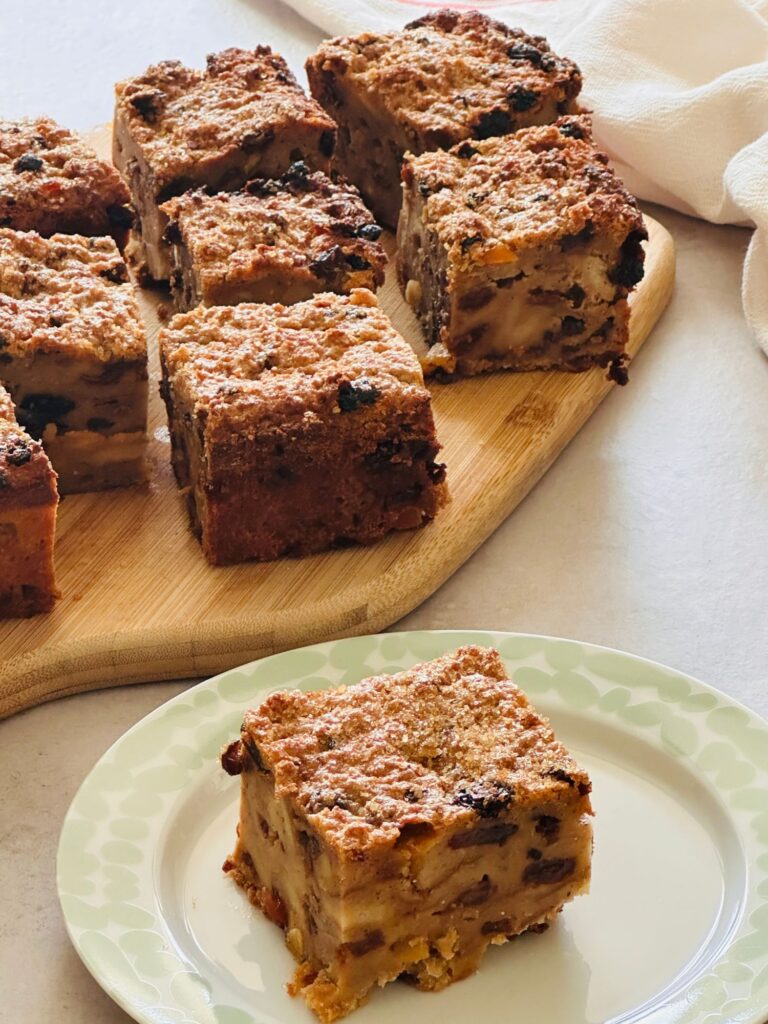
If you’ve got some leftover bread to use up, this classic bread pudding is one of the easiest and most satisfying bakes you can make. It’s soft in the middle, slightly crisp on top, and packed with warming spices and sweet dried fruit.
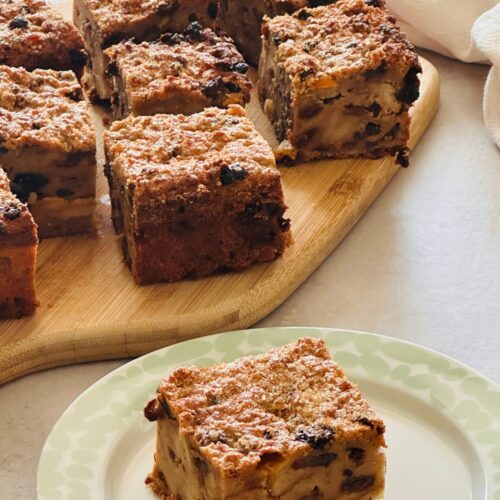
This version is made to be firm and sliceable, more like a traditional British bread pudding than a soft bread and butter pudding. It’s perfect for cutting into squares and enjoying with a cup of tea, or even packing into a lunchbox for later.
What You Need
For exact and concise instructions please head to the recipe card at the bottom of the page.
This is a simple store cupboard recipe, ideal for using up bread that’s starting to go a little stale. Slightly older bread actually works best as it soaks up the mixture really well. Having said that, I have tried this same recipe with a fresh loaf of bread and it works perfectly too – so if you are craving a bread pudding there’s no need to wait for the bread to go old!
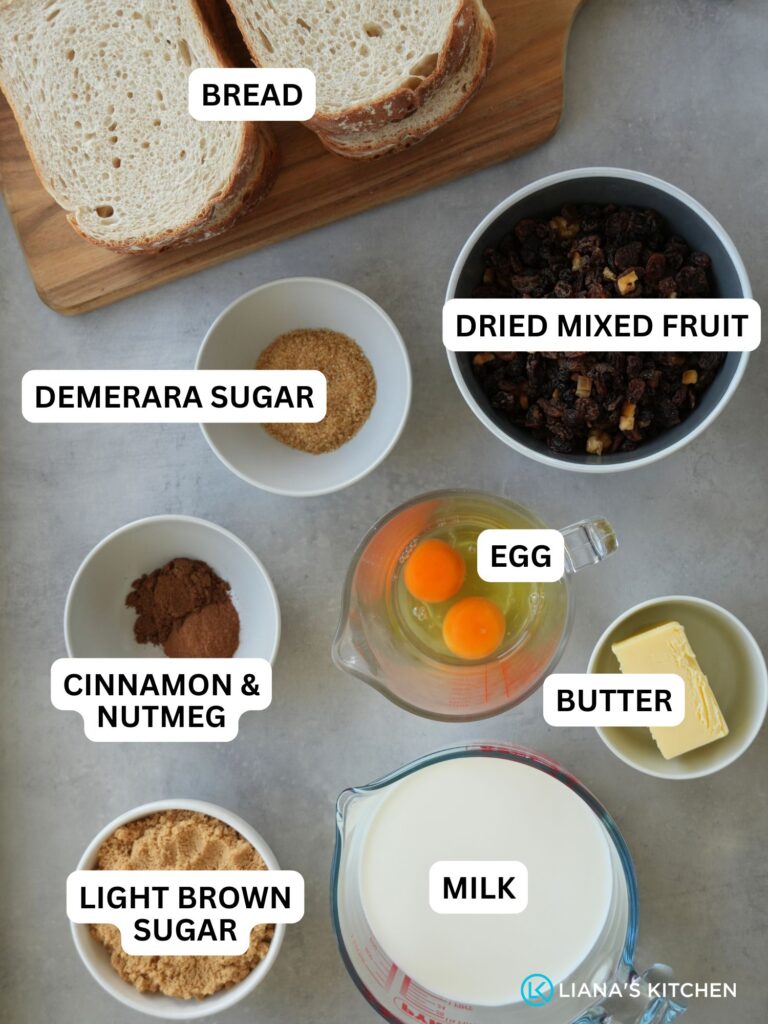
You’ll need bread (white or wholemeal both work), mixed spice and cinnamon for warmth, eggs and milk to bind everything together, and light brown sugar for sweetness. Mixed dried fruit adds texture and flavour, while melted butter enriches the pudding and helps it bake up beautifully. A sprinkle of demerara sugar on top gives a lovely slight crunch.
How to Make It
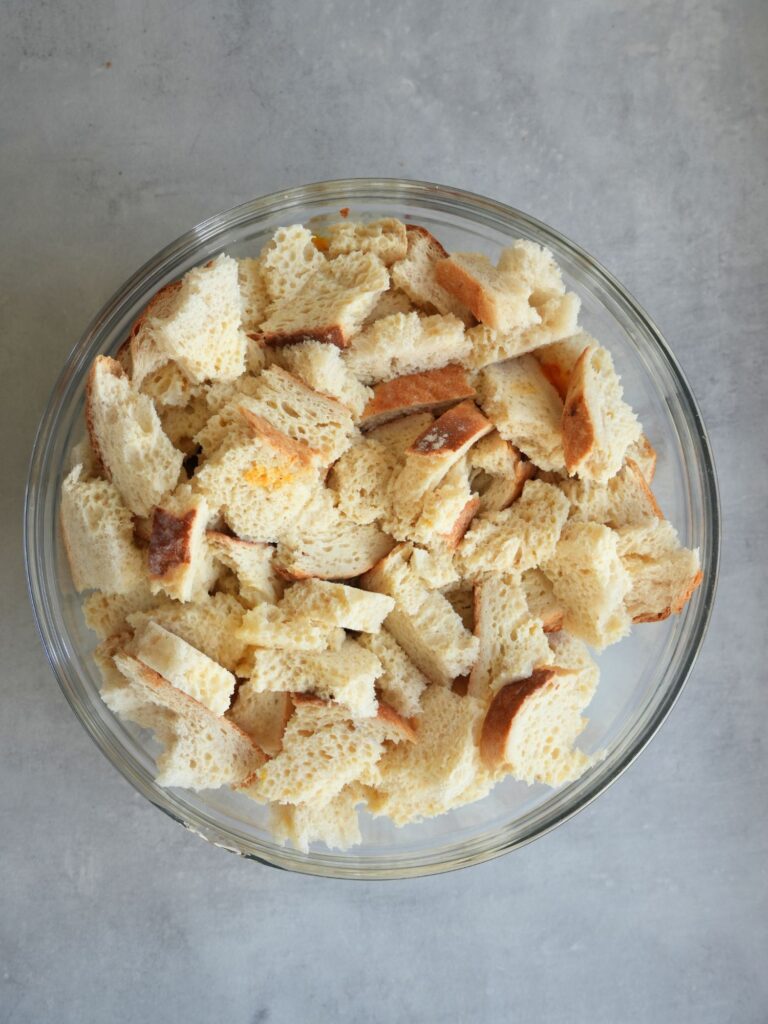
Start by tearing your bread into chunks and adding it to a large mixing bowl. Sprinkle over the mixed spice and cinnamon so everything gets evenly coated.
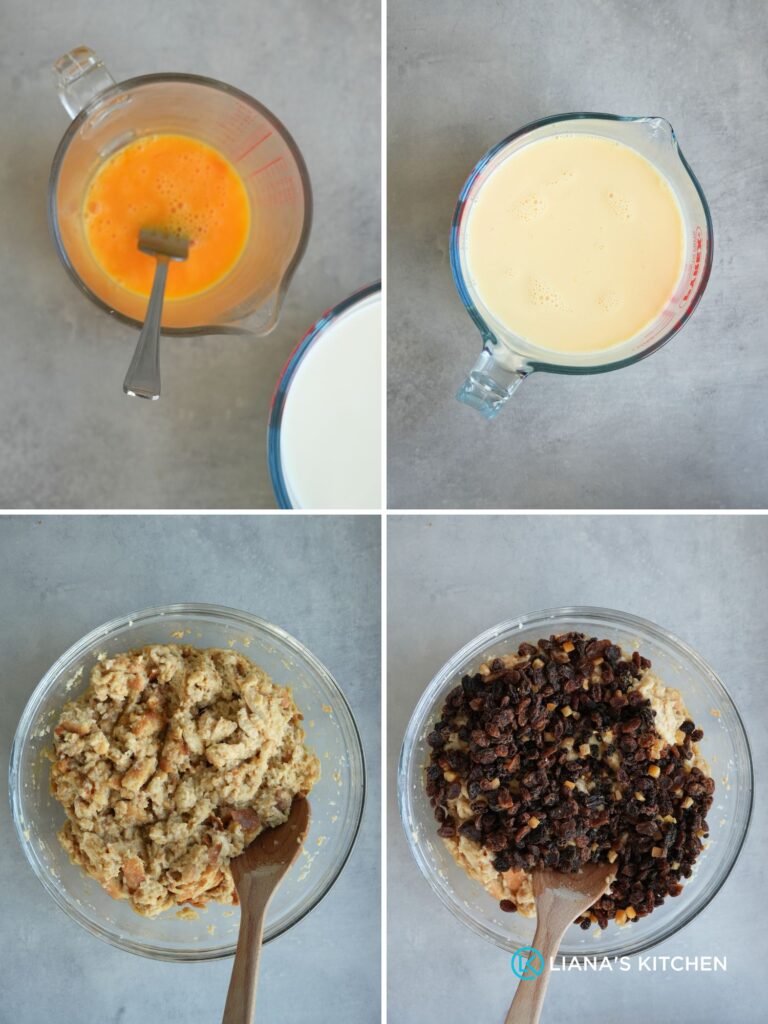
In a jug, whisk the eggs into the milk, then pour it over the bread along with the sugar. This is where it gets hands-on – use your hands to scrunch everything together until the bread breaks down and absorbs the liquid. You’re aiming for a thick, well-combined mixture rather than distinct pieces of bread.
Stir through the dried fruit, then leave the mixture to sit for about 15 minutes. This step is important as it allows the bread to fully soak up all the liquid, helping create that soft but sliceable texture.
While it’s soaking, preheat your oven and prepare your tin. A 20cm square tin works perfectly here and gives you a nice deep pudding.
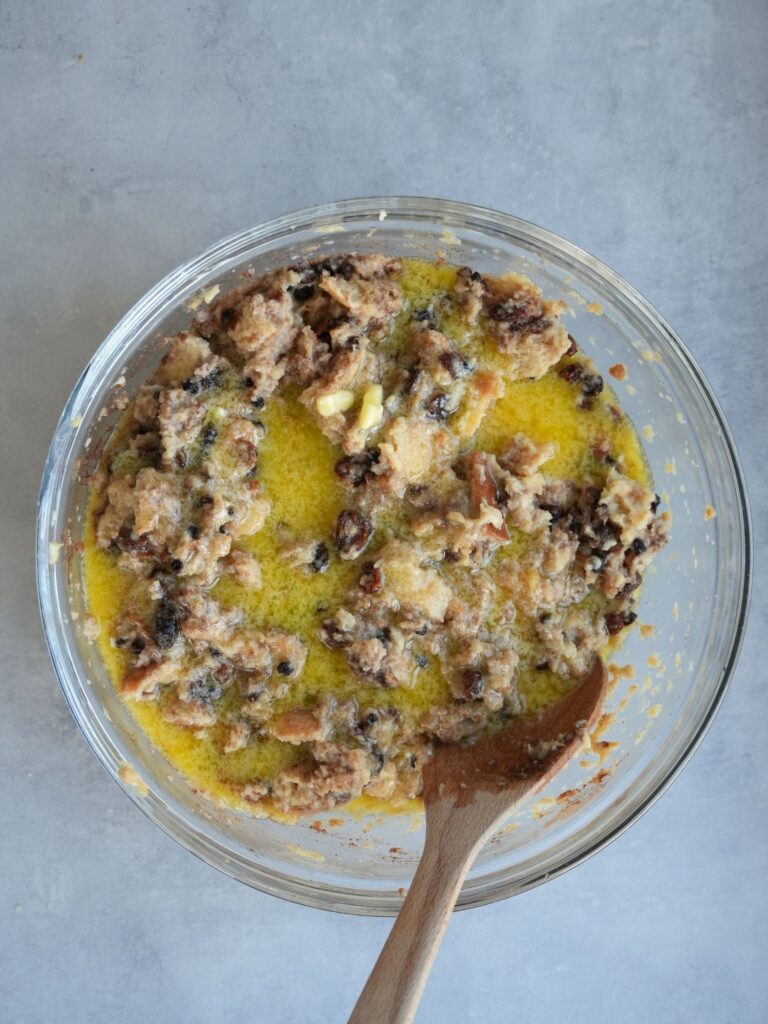
Once the mixture has rested, pour in the melted butter and give everything a really good stir. Spoon it into the prepared tin and press it down firmly into an even layer.
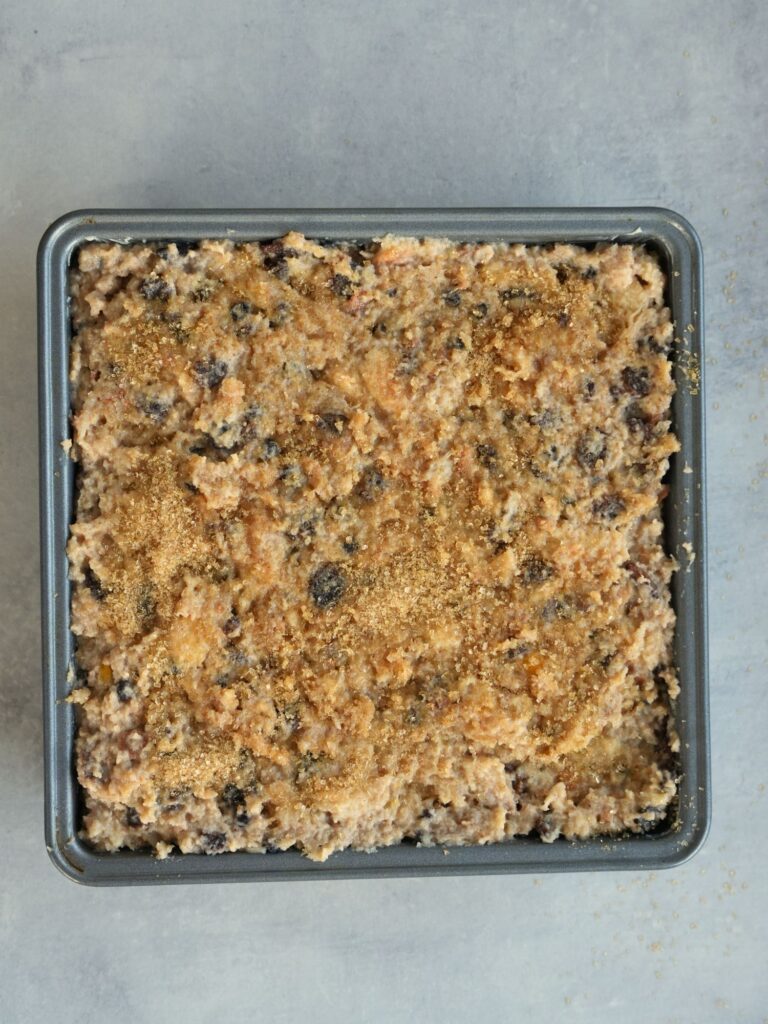
Scatter the demerara sugar over the top, then bake until deep golden and set in the middle. If the top starts to brown too quickly, just cover it loosely with foil.
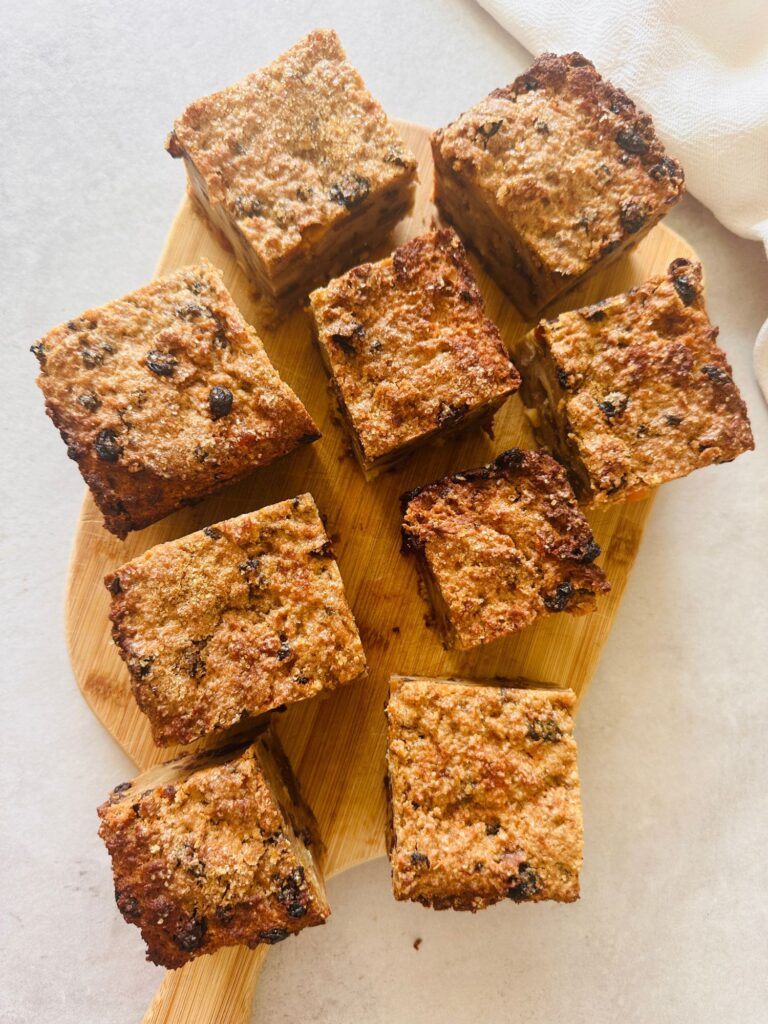
When it’s done, leave it to cool completely in the tin. This is key, it firms up as it cools, making it much easier to slice into neat squares.
Variations & Tips
- Use what bread you have – white, wholemeal, or a mix all work well
- Leave the crusts on – they help give structure and texture
- Add extras – try orange zest, chopped apple, or a handful of nuts
- Swap the fruit – raisins, sultanas, currants or mixed peel all work
- Adjust the spices – add nutmeg or ginger for a slightly different flavour
- For an extra rich version – replace a little of the milk with cream
- Press it down well – this helps create that firm, sliceable finish
Storage & Reheating
- Fridge: Store in an airtight container for up to 4 days
- Freezer: Freeze in slices for up to 3 months
- To reheat: Warm in the microwave for 30–60 seconds or in a low oven until heated through
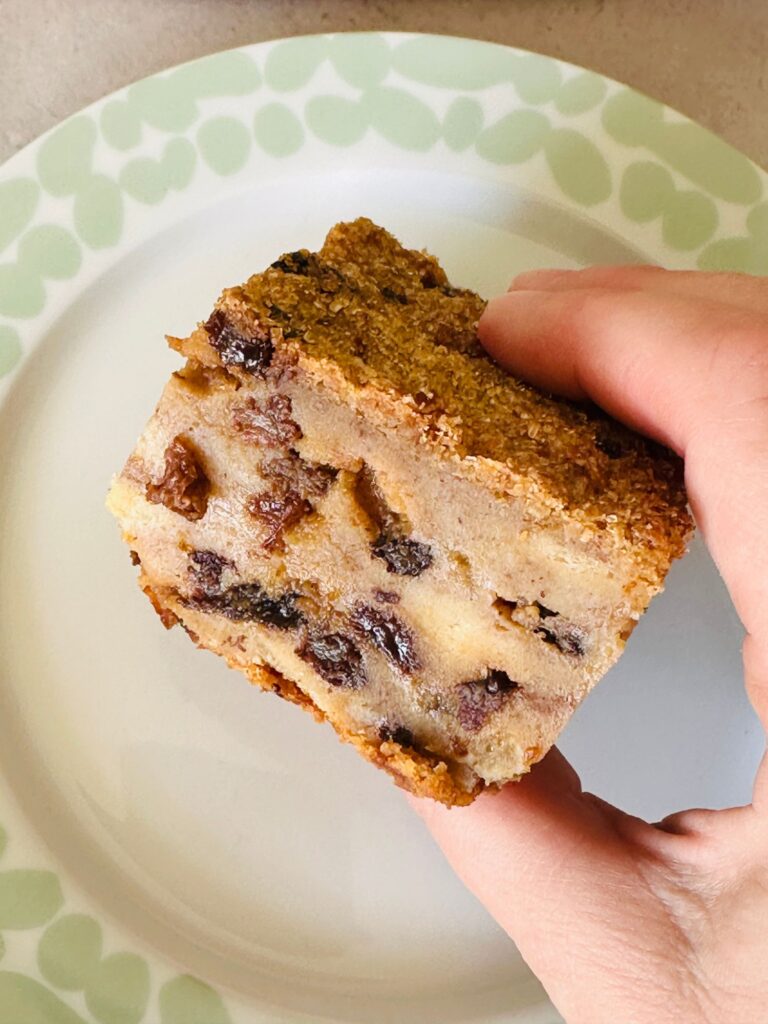
- To serve cold: It’s also delicious eaten cold, almost like a cake
A Little Background on Bread Pudding
Bread pudding has been around for centuries and is often thought of as one of the original “waste-not, want-not” recipes. It was traditionally made as a way to use up stale bread rather than letting it go to waste.
In the UK, bread pudding became especially popular in the 18th and 19th centuries, when frugal home cooking was essential. Simple ingredients like milk, eggs, sugar and dried fruit were combined with leftover bread to create something filling, comforting and surprisingly delicious.
Over time, different versions developed. Some recipes, like bread and butter pudding, are softer and more custard-like, while others, like this one, are firmer and more sliceable, closer to a traditional baked pudding you can cut into squares.
Even today, it’s still a favourite for its simplicity, affordability and comforting flavour, and a great reminder that some of the best recipes come from making the most of what you already have.
More Classic British Recipes
If you are looking for some more classic British bakes, puddings and desserts, check out the following for inspiration:
- Spotted Dick
- Apple Crumble
- Treacle Tart
- Treacle Sponge Pudding (in a microwave)
- Rhubarb Crumble
- Bread and Butter Pudding
- Ginger Cake
- Madeira Cake
- Rock Cakes
- Victoria Sponge Cake
- Shortbread
- Scones
- Lemon Drizzle Cake
- Flapjacks
Bread Pudding Recipe
Some of the links in this post may be affiliate links – which means if you buy the product I get a small commission (at no extra cost to you). If you do buy, then thank you! That’s what helps us to keep Liana’s Kitchen running.
Ingredients
- 500 g bread white or wholemeal, torn into chunks
- 1½ tsp mixed spice
- 1 tsp cinnamon
- 2 eggs beaten
- 600 ml whole milk
- 140 g light brown sugar
- 300 g mixed dried fruit
- 100 g butter melted
- 2 tbsp demerara sugar for the top
Instructions
- Add the torn bread to a large mixing bowl and sprinkle over the mixed spice and cinnamon.
- Whisk the eggs into the milk and pour over the bread along with the sugar. Get your hands in and scrunch everything together until the bread has completely broken down into the mixture.
- Stir through the dried fruit, then set the bowl aside for 15 minutes to allow everything to soak. Meanwhile preheat your oven to 180°C / 160°C fan / Gas Mark 4 and grease and line a 20cm square baking tin.
- Pour the melted butter into the mixture and stir well until fully combined.
- Spoon everything into your prepared tin and press down into an even layer. Scatter the demerara sugar over the top.
- Bake for around 90 minutes until deep golden and set firm in the middle. If the top is browning too quickly, lay a sheet of foil loosely over the tin.
- Once out of the oven, leave to cool fully in the tin before turning out and slicing into squares.
Nutrition
Nutrition information is automatically calculated, so should only be used as an estimate.
Maureen
Friday 20th of March 2026
Would this be ok cooked in the air fryer
Liana Green
Tuesday 24th of March 2026
I've not cooked it in the air fryer before but I don't see why it couldn't be